
1-Butanol
Synonym(s):1-Butanol;Butyl alcohol;Degassed and low oxygen 1-butanol;1-Butanol ZerO2;Butan-1-ol, n-Butyl alcohol, BuOH
- CAS NO.:71-36-3
- Empirical Formula: C4H10O
- Molecular Weight: 74.12
- MDL number: MFCD00002964
- EINECS: 200-751-6
- SAFETY DATA SHEET (SDS)
- Update Date: 2026-08-25 20:17:46
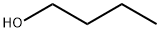
What is 1-Butanol?
Description
n-Butanol is a colourless flammable liquid with strong alcoholic odour, it is sometimes a useful substitute as a solvent for ethanol or isopropanol because of its higher boiling point (118 C).
Chemical properties
1-Butanol is a colorless, volatile liquid with a rancid sweet odor. The air odor threshold of 1-butanol was reported to be 0.83 ppm ; others have identified the minimum concentration with identifiable odor as 11 and 15 ppm.
Physical properties
Clear, colorless liquid with a rancid sweet odor similar to fusel oil. Experimentally determined detection and recognition odor threshold concentrations were 900 μg/m3 (300 ppbv) and 3.0 mg/m3 (1.0 ppmv), respectively (Hellman and Small, 1974). Odor threshold concentration in water is 500 ppb (Buttery et al., 1988). The least detectable odor threshold in concentration water at 60 °C was 0.2 mg/L (Alexander et al., 1982). Cometto-Mu?iz et al. (2000) reported nasal pungency threshold concentrations ranging from approximately 900 to 4,000 ppm.
Occurrence
1-Butanol is a natural product found in Vitis rotundifolia, Cichorium endivia, peppermint oil from Brazil, Achillea ageratum, tea, apple aroma, American cranberry, black currants, guava fruit, papaya, cooked asparagus, tomato, Swiss cheese, Parmesan cheese, heated butter, cognac, Armagnac, rum and cider.
The Uses of 1-Butanol
1-Butanol is used in the production of butylacetate, butyl glycol ether, and plasticizerssuch as dibutyl phthalate; as a solvent in thecoating industry; as a solvent for extractionsof oils, drugs, and cosmetic nail products;and as an ingredient for perfumes and flavor.
1-Butanol occurs in fusel oil and as aby-product of the fermentation of alcoholicbeverages such as beer or wine. It is presentin beef fat, chicken broth, and nonfilteredcigarette smoke (Sherman 1979).
Reaction

To a 15 C solution of the aryl chloride (A) (220 g, 860.37 mmol) and the amine (B) (137.7 g, 1.03 mol) in NMP (3.6 L) was added DIEA (450 mL, 2.58 mol). The resulting mixture was stirred at 80 C for 16 h, after which time it was cooled to 30 C and transferred into H2O (5 L) at RT. The resulting solids were filtered and the filter cake was rinsed with H2O (2 x 300 mL). The solid was slurried in EtOAc (350 mL) for 45 min at 15 C. The mixture was filtered, rinsing with 15 C EtOAc (2 x 250 mL), and dried to provide the product as an off-white solid. [226 g, 75%]
The Uses of 1-Butanol
As solvent for fats, waxes, resins, shellac, varnish, gums etc.; manufacture of lacquers, rayon, detergents, other butyl Compounds; in microscopy for preparing paraffin imbedding materials.
Definition
ChEBI: 1-Butanol is a primary alcohol that is butane in which a hydrogen of one of the methyl groups is substituted by a hydroxy group. It it produced in small amounts in humans by the gut microbes. It has a role as a protic solvent, a human metabolite and a mouse metabolite. It is a primary alcohol, a short-chain primary fatty alcohol and an alkyl alcohol.
Production Methods
The principal commercial source of 1-butanol is n-butyraldehyde obtained from the oxo reaction of propylene, followed by hydrogenation in the presence of a catalyst . 1-Butanol has also been produced from ethanol via successive dehydrogenation to acetaldehyde, followed by an aldol process. The earliest commercial route to 1-butanol, which is still used extensively in many Third World countries, employs fermentation of molasses or corn products with Clostridium acetobutylicum .
Aroma threshold values
Detection: 500 ppb to 509 ppm
General Description
Colorless liquid. Used in organic chemical synthesis, plasticizers, detergents, etc.
Air & Water Reactions
Highly flammable. Soluble in water.
Reactivity Profile
1-Butanol attacks plastics. [Handling Chemicals Safely 1980. p. 236]. Mixtures with concentrated sulfuric acid and strong hydrogen peroxide can cause explosions. May form explosive butyl hypochlorite by reacting with hypochlorous acid. May form butyl explosive butyl hypochlorite with chlorine.
Hazard
Toxic on prolonged inhalation, irritant to eyes. Toxic when absorbed by skin. Flammable, moderate fire risk. Eye and upper respiratory tract irritant.
Health Hazard
The toxicity of 1-butanol is lower than thatof its carbon analog. Target organs are theskin, eyes, and respiratory system. Inhalationcauses irritation of the eyes, nose, and throat.It was found to cause severe injury to rabbits’eyes and to penetrate the cornea uponinstillation into the eyes. Chronic exposureof humans to high concentrations may causephotophobia, blurred vision, and lacrimation.
Fire Hazard
HIGHLY FLAMMABLE: Will be easily ignited by heat, sparks or flames. Vapors may form explosive mixtures with air. Vapors may travel to source of ignition and flash back. Most vapors are heavier than air. They will spread along ground and collect in low or confined areas (sewers, basements, tanks). Vapor explosion hazard indoors, outdoors or in sewers. Runoff to sewer may create fire or explosion hazard. Containers may explode when heated. Many liquids are lighter than water.
Safety Profile
A poison by intravenous route. Moderately toxic by skin Review: Group 3 IMEMDT 7,56,87; Animal Inadequate Evidence IMEMDT 39,67,86* contact, ingestion, subcutaneous, and intraperitoneal routes. Human systemic Reported in EPA TSCA Inventory. Community fight-To-Ihow List. OSHA PEL: TWA 10 pprn Classifiable as a Carcinogen DFG MAK: 2 ppm (11 mg/m3) DOT CLASSIFICATION: 3; Label: Flammable Liquid ingestion, inhalation, skin contact, and intraperitoneal routes. Experimental reproductive effects. A skin and eye irritant. Questionable carcinogen. A flammable fight fire, use foam, CO2, dry chemical. Incompatible with oxidzing materials. When heated to decomposition it emits acrid and irritating fumes. See also ESTERS. effects by inhalation: conjunctiva irritation, unspecified respiratory system effects, and nasal effects. Experimental reproductive Though animal experiments have shown the butyl alcohols to possess toxic properties, they have produced few cases of poisoning in industry, probably because of their low reported to have resulted in irritation of the eyes, with corneal inflammation, slight headache and H2ziness, slight irritation of the nose and throat, and dermatitis about fingers. Keratitis has also been reported. Mutation data reported.
Synthesis
1-Butanol is obtained by fermentation of glycerol, mannite, starches, and sugars in general, using Bacillus butylicus sometimes synergized by the presence of Clostridium acetobutryricum; synthetically, from acetylene.
Potential Exposure
Butyl alcohols are used as solvents for paints, lacquers, varnishes, natural and synthetic resins, gums, vegetable oils, dyes, camphor, and alkaloids. They are also used as an intermediate in the manufacture of pharmaceuticals and chemicals; in the manufacture of artificial leather, safety glass; rubber and plastic cements, shellac, raincoats, photographic films, perfumes; and in plastic fabrication.
First aid
If this chemical gets into the eyes, remove anycontact lenses at once and irrigate immediately for at least15 min, occasionally lifting upper and lower lids. Seek medical attention immediately. If this chemical contacts theskin, remove contaminated clothing and wash immediatelywith soap and water. Seek medical attention immediately. Ifthis chemical has been inhaled, remove from exposure,begin rescue breathing (using universal precautions, including resuscitation mask) if breathing has stopped and CPR ifheart action has stopped. Transfer promptly to a medicalfacility. When this chemical has been swallowed, get medical attention. Give large quantities of water and inducevomiting. Do not make an unconscious person vomit.
Source
1-Butanol naturally occurs in white mulberries and papaya fruit (Duke, 1992). Identified as one of 140 volatile constituents in used soybean oils collected from a processing plant that fried various beef, chicken, and veal products (Takeoka et al., 1996).
Environmental Fate
Biological. 1-Butanol degraded rapidly, presumably by microbes, in New Mexico soils releasing carbon dioxide (Fairbanks et al., 1985).nbsp;
Photolytic. An aqueous solution containing chlorine and irradiated with UV light (λ = 350 nm) converted 1-butanol into numerous chlorinated compounds which were not identified (Oliver and Carey, 1977).
Chemical/Physical. Complete combustion in air yields carbon dioxide and water vapor. Burns with a strongly luminous flame (Windholz et al., 1983).
1-Butanol will not hydrolyze because it has no hydrolyzable functional group (Kollig, 1993).
Storage
Store n-butyl alcohol in a cool, dry, well-ventilated location, away from smoking areas. Fire hazard may be acute. Outside or detached storage is preferred. Separate from incompatibles. Containers should be bonded and grounded for transfer to avoid static sparks
Shipping
UN1120 Butanols, Hazard Class: 3; Labels: 3— Flammable liquid. UN1212 Isobutanol or Isobutyl alcohol, Hazard Class: 3; Labels: 3—Flammable liquid
Purification Methods
Dry it with MgSO4, CaO, K2CO3, or solid NaOH, followed by refluxing with, and distillation from, small amounts of calcium, magnesium activated with iodine, or aluminium amalgam. It can also be dried with molecular sieves, or by refluxing with n-butyl phthalate or succinate. (For method, see Ethanol.) n-Butanol can also be dried by efficient fractional distillation, water passing over in the first fraction as a binary azeotrope (contains about 37% water). An ultraviolet-transparent distillate has been obtained by drying with magnesium and distilling from sulfanilic acid. To remove bases, aldehydes and ketones, the alcohol is washed with dilute H2SO4, then NaHSO4 solution; esters are removed by boiling for 1.5hours with 10% NaOH. It has also been purified by adding 2g NaBH4 to 1.5L butanol, gently bubbling with argon and refluxing for 1 day at 50o. Then adding 2g of freshly cut sodium (washed with butanol) and refluxed for 1day. Distil and collect the middle fraction [Jou & Freeman J Phys Chem 81 909 1977]. [Beilstein 1 IV 1506.]
Toxicity evaluation
The primary effects observed following oral and inhalation exposure in rats and mice to n-butyl alcohol include neurological and neurodevelopmental effects. 1-Butanol has been evaluated in a large number of experimental animal and in vitro studies examining possible mechanisms for alcoholinduced neurotoxicity. One proposed mechanism is that alcohols, in general, produce neurological changes by disrupting the lipid bilayer. A few experimental animal studies have shown that n-butyl alcohol, like other alcohols, can disrupt membrane integrity. Other in vitro and experimental animal studies have demonstrated that n-butyl alcohol interacts with protein-receptors and modulates their effects such that it potentiates inhibitory g-aminobutyric acid (GABA) and glycine receptors and inhibits excitatory neuronal receptors such a glutamate.
Incompatibilities
1-Butanol is incompatible with oxidizers (chlorates, nitrates, peroxides, permanganates, perchlorates, chlorine, bromine, fluorine, etc.); contact may cause fires or explosions. Keep away from alkaline materials, strong bases, strong acids, oxoacids, epoxides. Attacks some plastics, rubber and coatings. n-Butanol is incompatible with strong acids; halogens, caustics, alkali metals; aliphatic amines; isocyanates. sec-Butanol forms an explosive peroxide in air. Ignites with chromium trioxide. Incompatible with strong oxidizers; strong acids; aliphatic amines; isocyanates, organic peroxides. tert-Butanol is incompatible with strong acids (including mineral acid), including mineral acids; strong oxidizers or caustics, aliphatic amines; isocyanates, alkali metals (i.e., lithium, sodium, potassium, rubidium, cesium, francium). isoButanol is incompatible with strong acids; strong oxidizers; caustics, aliphatic amines; isocyanates, alkali metals and alkali earth. May react with aluminum at high temperatur
Waste Disposal
Incineration, or bury absorbed waste in an approved land fill.
Properties of 1-Butanol
| Melting point: | -90 °C (lit.) |
| Boiling point: | 116-118 °C (lit.) |
| Density | 0.81 g/mL at 25 °C (lit.) |
| vapor density | 2.55 (vs air) |
| vapor pressure | 6.7 hPa (20 °C) |
| FEMA | 2178 | BUTYL ALCOHOL |
| refractive index | n |
| Flash point: | 95 °F |
| storage temp. | Store at +5°C to +30°C. |
| solubility | water: soluble |
| form | Liquid |
| appearance | Colorless liquid 0.81 g/mL |
| pka | 15.24±0.10(Predicted) |
| color | APHA: ≤10 |
| Odor | Alcohol-like; pungent; strong; characteristic; mildly alcoholic, non residual. |
| Relative polarity | 0.586 |
| PH | 7 (70g/l, H2O, 20℃) |
| explosive limit | 1.4-11.3%(V) |
| Odor Threshold | 0.038ppm |
| Water Solubility | 80 g/L (20 ºC) |
| Sensitive | Moisture Sensitive |
| λmax | λ: 215 nm Amax: 1.00 λ: 220 nm Amax: 0.50 λ: 240 nm Amax: 0.10 λ: 260 nm Amax: 0.04 λ: 280-400 nm Amax: 0.01 |
| JECFA Number | 85 |
| Merck | 14,1540 |
| BRN | 969148 |
| Henry's Law Constant | 49.2 at 50 °C, 92.0 at 60 °C, 152 at 70 °C, 243 at 80 °C (headspace-GC, Hovorka et al., 2002) |
| Exposure limits | TLV-TWA 300 mg/m3 (100 ppm) (NIOSH),
150 mg/m3 (50 ppm) (ACGIH); IDLH 8000
ppm (NIOSH). |
| Dielectric constant | 17.1(25℃) |
| Stability: | Stable. Incompatible with strong acids, strong oxidizing agents, aluminium, acid chlorides, acid anhydrides, copper, copper alloys. Flammable. |
| CAS DataBase Reference | 71-36-3(CAS DataBase Reference) |
| NIST Chemistry Reference | 1-Butanol(71-36-3) |
| EPA Substance Registry System | 1-Butanol (71-36-3) |
Safety information for 1-Butanol
| Signal word | Danger |
| Pictogram(s) |
 Flame Flammables GHS02  Corrosion Corrosives GHS05  Exclamation Mark Irritant GHS07 |
| GHS Hazard Statements |
H226:Flammable liquids H302:Acute toxicity,oral H315:Skin corrosion/irritation H318:Serious eye damage/eye irritation H335:Specific target organ toxicity, single exposure;Respiratory tract irritation H336:Specific target organ toxicity,single exposure; Narcotic effects |
| Precautionary Statement Codes |
P210:Keep away from heat/sparks/open flames/hot surfaces. — No smoking. P233:Keep container tightly closed. P280:Wear protective gloves/protective clothing/eye protection/face protection. P301+P312:IF SWALLOWED: call a POISON CENTER or doctor/physician IF you feel unwell. P303+P361+P353:IF ON SKIN (or hair): Remove/Take off Immediately all contaminated clothing. Rinse SKIN with water/shower. P305+P351+P338:IF IN EYES: Rinse cautiously with water for several minutes. Remove contact lenses, if present and easy to do. Continuerinsing. |
Computed Descriptors for 1-Butanol
1-Butanol manufacturer
Shree Mahalaxmi Chemicals
New Products
5-bromo-4-fluoro-2-nitrobenzaldehyde (R)-(-)-2-Amino-1-propanol Cyclobutanone Fmoc-OSu 1-(2-Chloroethyl)pyrrolidine Hydrochloride 2-Amino-2-(4-methylphenyl)acetic acid β-Bromostyrene Ethyl 3-phenylpropanoate Phenethyl cinnamate Dipropyl disulfide 4 pentyn 1 ol N-Vinylformamide Methacrylate-PEG-Methacrylate, Mn:35000 2,4-Dihydroxyacetophenone 2-Chloro 5-Fluoro Pyridine Vasicinone 2-Chloroisonicotinic Acid Tween 80 or Polysorbate 80 2-Butyn-1-oL 2-Pentyn-1-oL 4-Nitrobenzotrifluoride N-(4-fluoro-2-methoxy-5-nitrophenyl)-4-(1-methyl-1H-indol-3-yl)pyrimidin-2-amine Pirtobrutinib intd. N-(4-Cyano-3-(trifluoromethyl)phenyl)-2-methyloxirane-2-carboxamideRelated products of tetrahydrofuran



You may like
-
 N Butanol 99%View Details
 -
Normal Butanol 99%View Details
-
N- Butanol CASView Details
-
N Butanol CASView Details
-
N Butanol CASView Details
-
N.Butanol CASView Details
-
N-Butanol CASView Details
-
N-Butanol CASView Details