
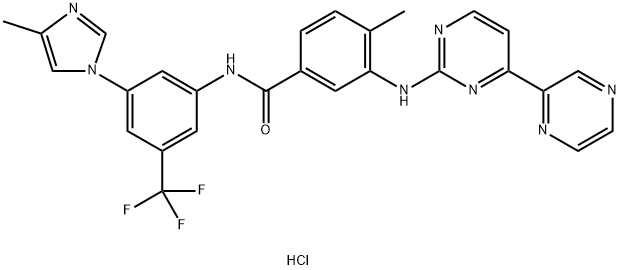
COMPUTED DESCRIPTORS
| Molecular Weight | 603.4 g/mol |
|---|---|
| Hydrogen Bond Donor Count | 4 |
| Hydrogen Bond Acceptor Count | 10 |
| Rotatable Bond Count | 6 |
| Exact Mass | 602.1323973 g/mol |
| Monoisotopic Mass | 602.1323973 g/mol |
| Topological Polar Surface Area | 111 Ų |
| Heavy Atom Count | 41 |
| Formal Charge | 0 |
| Complexity | 818 |
| Isotope Atom Count | 0 |
| Defined Atom Stereocenter Count | 0 |
| Undefined Atom Stereocenter Count | 0 |
| Defined Bond Stereocenter Count | 0 |
| Undefined Bond Stereocenter Count | 0 |
| Covalently-Bonded Unit Count | 3 |
| Compound Is Canonicalized | Yes |
PRODUCT INTRODUCTION
description
Radotinib Hydrochloride is an orally available, hydrochloride salt form of radotinib, a second-generation tyrosine kinase inhibitor of Bcr-Abl fusion protein and the platelet-derived growth factor receptor (PDGFR), with potential antineoplastic activity. Upon administration, radotinib specifically inhibits the Bcr-Abl fusion protein, an abnormal enzyme expressed in Philadelphia chromosome positive chronic myeloid leukemia (CML) cells. In addition, this agent also inhibits PDGFR thereby blocking PDGFR-mediated signal transduction pathways. The inhibitory effect of radotinib on these specific tyrosine kinases may decrease cellular proliferation and inhibit angiogenesis. This agent has shown potent efficacy in CML cells that are resistant to the first-generation standard tyrosine kinase inhibitors, such as imatinib, nilotinib and dasatinib. PDGFR, upregulated in many tumor cell types, is a receptor tyrosine kinase essential to cell migration and the development of the microvasculature.