


Disodium pamidronate
Product Details
- Product NameDisodium pamidronate
- CAS No.109552-15-0
- EINECS No.682-054-0
- MFC3H14NNaO8P2
- MW277.08
- AppearanceWhite solidWhite to off-white
- storage temp. 2-8°C
▼
▲
Disodium pamidronate Basic information
▼
▲
Product Name:
Synonyms:
AREDIA;GCP-23339A;disodium 3-amino-1-hydroxy-propylidenebisphosphonate;AMINOMUX;3-AMINO-1-HYDROXYPROPYLIDENE-BISPHOSPHONIC ACID, 2NA;PAMIDRONATE DISODIUM;PAMIDRONATE SODIUM;PAMIDRONIC ACID, DISODIUM SALT
CAS:
MF:
C3H9NNa2O7P2
MW:
279.03
EINECS:
682-054-0
Product Categories:
Mol File:
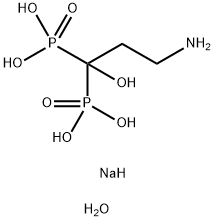
▼
▲
Disodium pamidronate Chemical Properties
▼
▲
storage temp.
2-8°C
solubility
Soluble in water, practically insoluble in methylene chloride. It is sparingly soluble in dilute mineral acids and dissolves in dilute alkaline solutions.
form
White solid
CAS DataBase Reference
▼
▲
Safety Information
▼
▲
WGK Germany
3
RTECS
SZ6522666
HS Code
2931909042
▼
▲
Disodium pamidronate Usage And Synthesis
▼
▲
Bone metastases are the most common clinical complication in malignant tumors. According to statistics, about 20% -70% of patients with malignant tumors will have bone metastases. The occurrence of bone metastases suggests that tumor progression has reached the advanced stage and the pathological changes caused by bone metastases complications such as fractures have caused great pain to patients. The main clinical symptoms include pain in the transfer site, symptoms of nerve compression, pathological fractures, nerve root damage and spinal cord compression. Therefore, it is very important to relieve the bone pain of patients with bone metastasis and to suppress the occurrence and development of metastasis. Bisphosphonates are the internationally recognized drugs for the treatment of bone metastases. Studies have shown that they can inhibit bone re-sorption, induce osteoclast death, and enhance the activity of osteoclasts caused by the release of various stimulating factors, and relieve the pain of patients with bone pain symptom. Bone metastases is a malignant tumor of other organs transferred to the bone of the tumor, is one of the common clinical tumor complications.
Pamidronate disodium is the second generation of bisphosphonates, studies have shown that pamidronate disodium for cancer-related hypercalcemia and malignant tumors caused by bone pain have a good effect in the treatment of diseases associated with abnormally increased osteoclast activity, and osteolysis caused by advanced tumor bone metastases.
Pamidronate disodium is a bone re-sorption inhibitor with an intensity of 100 times that of etidronate. It can be used for osteoporosis and osteitis deformans caused by various reasons, can eliminate pain, improve exercise capacity and reduce pathological bone. It can also be used for the treatment of malignant tumor caused by hypercalcemia. It has high affinity to the intraosseous hydroxyapatite, can inhibit the dissolution of hydroxyapatite and osteoclast activity. This product can enter into and bind to the hydroxyapatite crystal; when osteoclasts dissolve crystals, the drug will be released to form a protective film to inhibit the activity of osteoclasts; it can also by indirectly inhibit bone re-sorption through osteoblast.
Pamidronate disodium is the second generation of bisphosphonates, studies have shown that pamidronate disodium for cancer-related hypercalcemia and malignant tumors caused by bone pain have a good effect in the treatment of diseases associated with abnormally increased osteoclast activity, and osteolysis caused by advanced tumor bone metastases.
Pamidronate disodium is a bone re-sorption inhibitor with an intensity of 100 times that of etidronate. It can be used for osteoporosis and osteitis deformans caused by various reasons, can eliminate pain, improve exercise capacity and reduce pathological bone. It can also be used for the treatment of malignant tumor caused by hypercalcemia. It has high affinity to the intraosseous hydroxyapatite, can inhibit the dissolution of hydroxyapatite and osteoclast activity. This product can enter into and bind to the hydroxyapatite crystal; when osteoclasts dissolve crystals, the drug will be released to form a protective film to inhibit the activity of osteoclasts; it can also by indirectly inhibit bone re-sorption through osteoblast.
Pamidronate disodium is a potent osteoclastic bone resorption inhibitor. In vitro, it binds tightly to hydroxyapatite crystals and inhibits the formation and dissolution of these crystals. In the body, it can bind to the bone mineral with certain inhibitory effect on the osteoclastic bone resorption. Pamidronate disodium inhibits osteoclast precursor attachment to bone and inhibits its conversion to mature, functional osteoclasts. Local and direct bone resorption effects of bone-bound bisphosphonates are the major mode of action both in vivo and in vitro. Experimental studies have shown that pamidronate disodium can inhibit tumor-induced osteolysis either before or simultaneously with tumor cells inoculated or transplanted. Its inhibitory effect on tumor-induced hypercalcaemia manifested by the following biochemical changes: decreased serum calcium, and secondary reduction of excretion of calcium, phosphate and hydroxyproline in the urine.
Pharmacokinetics: This product is poorly absorbed in the gastrointestinal tract after oral administration; the bioavailability is very low (1% to 3%). After intravenous infusion of this product, steady-state blood concentration is reached within 2 to 3 hours. It is mainly distributed in the bones, liver, spleen and tracheal cartilage with the binding rate with bone being 50% and half-life in bone being 300 days. This product's plasma protein binding rate is 54%, being rapidly eliminated in plasma with plasma half-life of 0.8 to 2 hours. This product is not metabolized in the body, 20% to 55% prototype drugs is excreted from the urine at 72 hours after administration.
Pharmacokinetics: This product is poorly absorbed in the gastrointestinal tract after oral administration; the bioavailability is very low (1% to 3%). After intravenous infusion of this product, steady-state blood concentration is reached within 2 to 3 hours. It is mainly distributed in the bones, liver, spleen and tracheal cartilage with the binding rate with bone being 50% and half-life in bone being 300 days. This product's plasma protein binding rate is 54%, being rapidly eliminated in plasma with plasma half-life of 0.8 to 2 hours. This product is not metabolized in the body, 20% to 55% prototype drugs is excreted from the urine at 72 hours after administration.
At present, the preparation route of pamidronate disodium is mainly as follows: starting from β-alanine, firstly prepare pamidronate and then prepare pentasodium salt of disodium salt by the following process: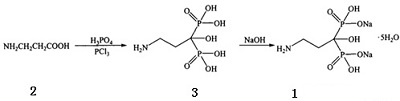 Figure 1 shows the synthetic route of pamidronate
Figure 1 shows the synthetic route of pamidronate- When used in combination with calcitonin, it can produce synergies, leading to a more rapid decrease in serum calcium.
- This product may not be combined with other types of bisphosphonates.
- Owing to the formation of complexes with divalent cations, this product may not be added to calcium-containing intravenous drugs.
For the treatment of bone pain caused by hypercalcemia complicated by malignant tumor and osteolytic cancer metastasis; Degenerative osteitis (Paget's disease) and a variety of osteoporosis; Hyperparathyroidism; tumor bone metastasis-caused excessive dissolution of bone destruction and its complications (such as bone pain pathological fractures, etc.) treatment; also be used for multiple myeloma. For the treatment of hypercalcaemia and osteoporosis.
The most common is the short, self-limiting fever; a small number of patients may have increased bone pain at the beginning of medication; also have body malaise, leukopenia. After intravenous administration, patients may have local reactions, thrombophlebitis, chills and so on. Less common adverse reactions include eye reactions such as uveitis, scleritis and conjunctivitis; a small number of patients have allergic reactions such as rashes; gastrointestinal reactions can cause nausea, vomiting, abdominal pain, diarrhea, loss of appetite and constipation.
- Patients may have nausea, vomiting, abdominal pain, constipation or diarrhea. Symptoms include chills, chest pain, chest tightness, dizziness and fatigue. Patients of symptomatic esophageal reflux disease, hiatal hernia prone to get esophageal mucosal irritation.
- Intravenous injection or injection can cause transient changes in taste or loss. At 1 to 2 days after injection, it can occur short-term fever.
- High-dose (daily 10 ~ 20mg / kg) can cause bone mineralization disorders, leading to osteomalacia or fracture.
- The drug and bisphosphonates should not be used for allergic history patients. Renal damage patients use with caution. The drug may affect bone growth, and should generally not be used for children.
- During medication process, people should pay attention to monitoring serum calcium, phosphorus, magnesium, potassium and creatinine and so on.
- The injection need administrated through slowly intravenous infusion after calcium-free liquid dilution in order to reduce nephrotoxicity; intravenous injection time should be maintained at least 2 hours, can’t be directly injected intravenously.
Chemical Properties
White or almost white, crystalline powder.
Uses
Bone resorption inhibitor.
Brand name
Aredia (Novartis).
▼
▲
Disodium pamidronate Preparation Products And Raw materials
▼
▲
Preparation Products
Company Profile Introduction
Henan CoreyChem Co., Ltd, based on the original Zhengzhou Cote Chemical Research Institute, be brave in absorbing highly educated talents & overseas returnees; actively responded to Zhengzhou City High-tech Zone Government’s Special Care Policy, reorganized and founded in National University of Science and Technology Park, which is a high-tech, stock enterprise of high-end chemical Custom synthesis;The park was created by the People's Government of Henan Province, and proved by Ministry of Education and the National Science & Technology, taking the construction mode of "many college a park, and common development", mainly depends on Zhengzhou University and Henan University’s scientific research and talent advantage to set up Universities, scientific research institute and enterprise scientific research achievements transformation platform, to make high-tech enterprises incubate, is the new high-tech talent gathering base, high and new technology industry enterprise radiation base, colleges and universities technological innovation base.
Henan Coreychem Co., Ltd, facing global High-tech pharmaceutical raw materials, high complex new type intermediates, fine chemicals custom synthesis, scale-up production and Rare chemicals trade. Corey have well-equipped machine, strong technical force and considerate marketing team service. We also have rich experience advantage in basic research, small scale process development, scale-up, industrial technology development & production and cost control.

- Since:2014-12-17
- Address: No.967,15th Floor,Unit 7, Building 1, No.70 of DianChang Road, High-tech Development Zone, Zhengzho
INQUIRY