
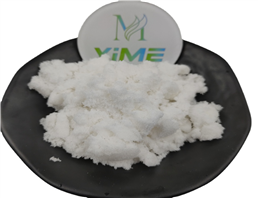
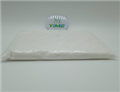
Procaine base
| Price | USD50.00 |
| Packge | 1KG |
- Min. Order:1KG
- Supply Ability:20t/month
- Time:2022-08-17
Product Details
- Product NameProcaine base
- CAS No.59-46-1
- EINECS No.200-426-9
- MFC13H20N2O2
- MW236.31
- AppearanceSolidWhite to Off-White
- Melting point 61°
- Boiling point 378.78°C (rough estimate)
- density 1.0604 (rough estimate)
- Water Solubility 9.45g/L(30 ºC)
- storage temp. Keep in dark place,Sealed in dry,Room Temperature
Melting point: 61 °
Boiling point: 378.78°C (rough estimate)
Density: 1.0604 (rough estimate)
Index of refraction: 1.5430 (Estimate)
Keep in dark place,Sealed in dry,Room Temperature
PKa: 9.04±0.01(H2O, T =25,I=0.1(NaCl))(Approximate)
Water solubility :9.45g/L(30 ºC)
The duration of local anesthesia of procaine is about 1 hour. If a small amount of epinephrine is added to the liquid, the effect can be maintained for 1 to 2 hours. It has weak penetration of skin and mucous membranes and is not suitable for topical anesthesia. After absorption, this product is mainly hydrolyzed by plasma pseudocholinesterase into p-aminobenzoic acid and diethylaminoethanol. The former can compete against the antibacterial effect of sulfa drugs and weaken the efficacy of sulfa drugs; The latter can enhance the role of digitalis, has used enough digitalis patients with caution with this drug. If procaine is used with succinylcholine, both drugs are hydrolyzed by plasma pseudocholinesterase. In the case of intravenous infusion of large amounts of procaine, it is possible to compete with the hydrolytic enzyme to reduce the hydrolytic inactivation of succinylcholine, and significantly strengthen and prolong the muscle relaxation, resulting in respiratory paralysis.
If procaine is absorbed in large quantities, it will have an exciting effect on the central nervous system, and then turn into inhibition, which is manifested as restlessness, convulsion, coma, respiratory paralysis, and a few patients have allergic reactions.
This product is an ester local anesthetic, which can temporarily block the conduction of nerve fibers and has an anesthetic effect. The product has weak penetration to skin and mucous membrane and is not suitable for surface anesthesia. This product to central nervous system constant inhibition, excessive excitement. First cause sedation, dizziness, pain threshold increase, then cause vertigo, directional disorder, ataxia, central inhibition continues to deepen, appear dull perception, consciousness fuzzy, and then into coma state. Dosage continues to increase, can appear muscle tremor, fidgety and convulsion and other central excitatory poisoning symptoms. Low dose of this product has the effect of stimulating sympathetic nerve, so as to accelerate heart rate and increase blood pressure. When the dose increases, blood pressure decreases and heart rate increases due to myocardial inhibition, peripheral vascular dilation and mild ganglion blockade. This product inhibits the release of acetylcholine from presynaptic membrane, produces certain neuromuscular block, enhances the effect of non-depolarized muscle relaxants, directly inhibits smooth muscle, and can relieve smooth muscle spasm.
The duration of local anesthesia of procaine is about 1 hour. If a small amount of epinephrine is added to the liquid, the effect can be maintained for 1 to 2 hours. It has weak penetration of skin and mucous membranes and is not suitable for topical anesthesia. After absorption, this product is mainly hydrolyzed by plasma pseudocholinesterase into p-aminobenzoic acid and diethylaminoethanol. The former can compete against the antibacterial effect of sulfa drugs and weaken the efficacy of sulfa drugs; The latter can enhance the role of digitalis, has used enough digitalis patients with caution with this drug. If procaine is used with succinylcholine, both drugs are hydrolyzed by plasma pseudocholinesterase. In the case of intravenous infusion of large amounts of procaine, it is possible to compete with the hydrolytic enzyme to reduce the hydrolytic inactivation of succinylcholine, and significantly strengthen and prolong the muscle relaxation, resulting in respiratory paralysis.
If procaine is absorbed in large quantities, it will have an exciting effect on the central nervous system, and then turn into inhibition, which is manifested as restlessness, convulsion, coma, respiratory paralysis, and a few patients have allergic reactions.
Naomi Lee
http://www.china-yime.com/
https://www.chem-yime.com/
Mail: sales1@china-yime.com
Wechat/whatsapp/telegram: +86 17717788328
Wickr Me:naomilee2021
Instagram/facebook:Naomi Lee
Company Profile Introduction
Yime are mainly engaged in the production and sales of plant extract,cosmetic ingredients.
Our main ingredients are alpha arbutin,vitamin c,niacinamide,tranexamic acid,glutathione,sepiwhite,snow white,gigawhite,retinol,tocopherol,coenzyme Q10,Astaxanthin,ferulic acid,sodium hyaluronate,squalane,panthenol,Ceramide,mandelic acid,lactic acid,azelaic acid,lactobionic acid,salicylic acid,glycolic acid,malic acid,tartaric acid, aloe vera extract,licorice extract,calendula extract,btms-50,cetyl alcohol...
We manufacturer for 10 years of experience based in China,We welcome your inquiries!
Recommended supplier
- Ronak Alkalies And Chemicals Private Limited
- RAW CAS 59-46-1 Procaine API
- Inquiry
- 2025-09-23

- Since:2010-07-28
- Address: Room 1206, Block B, Dongsheng Plaza, Shijiazhuang, Hebei, China